What is Continuous Automated Red Teaming (CART)?
Continuous Automated Red Teaming (CART) is a proactive security strategy that automates the intelligence, behaviors, and methodologies of a human Red Team through a specialized platform. Most CART solutions use breach and attack simulation (BAS) to safely replicate real attacker tactics, techniques, and procedures (TTPs)—including control bypass, lateral movement, and data exfiltration—in a continuous, automated cycle.
An Automated Red Team Playbook
Human Red Teams rely on a defined set of attack simulations to test an environment. CART operationalizes that playbook, running those simulations around the clock across your entire environment to reveal gaps as they emerge.
Intelligence-Driven Prioritization
Modern CART platforms prioritize attacks using relevant threat intelligence—applying concepts found in Adversarial Exposure Validation (AEV)—and deliver immediate, actionable insights whenever a control fails or a new exposure appears.
In short, CART continuously emulates real-world attacker behavior (lateral movement, credential theft, privilege escalation, and more) to validate your defenses in real time—not just during periodic, point-in-time assessments.
Why Manual Pen Testing Falls Short
Traditional manual penetration testing suffers three fatal flaws: it’s slow, expensive, and often lacks the depth and scale of a real attacker. Teams can’t afford to wait months between tests while adversaries evolve weekly. Manual tests also tend to be narrow in scope and produce static results that quickly go out of date. CART fills that gap by running continuous, realistic simulations that uncover weaknesses as they emerge, enabling faster remediation and a stronger security posture.
Key Points About CART:
- Continuous: Attacks are simulated constantly, not just occasionally
- Automated: Uses software to replicate attacker tactics safely and efficiently
- Red Teaming: Mimics sophisticated adversaries to see if your defenses, detection systems, and response processes actually work
- Proactive Defense: Empowers teams to spot vulnerabilities as soon as they appear and improve security posture continuously
Think of it as a 24/7 attack simulator that safely challenges your defenses—keeping your security controls sharp and your team prepared.
 | Learn more about how Continuous Automated Red Teaming (CART) keeps your security validated 24/7, prioritizes threats, and boosts cyber resilience on the Cyber Resilience Brief podcast. |
Does CART Eliminate Manual Red Teaming?
No—It Amplifies and Supercharges Scale.
CART doesn’t replace human-led red teaming; it enhances it. Automation handles the scale—running thousands of attack scenarios across systems, endpoints, and cloud environments—while humans provide the strategic insight and creativity that automation can’t replicate.
By offloading repetitive, routine testing to CART, security teams can focus their expertise on deeper investigations, complex threat modeling, and interpreting the results that require human judgment. The result is continuous, data-driven validation paired with targeted, high-value human analysis.In short, CART handles the scale; humans handle the nuance.
Scaling Red Teaming with CART: Why it Matters
CART enables your team to scale by transforming testing from one-time events to an ongoing process—expanding coverage and speed while lowering cost per test. This scalability drives smarter, data-informed decisions, and when combined with periodic human-led red teaming, delivers both comprehensive coverage and deep tactical insight.
How CART scale shows up in practice:
- Continuous coverage: simulations run 24/7 across networks, endpoints, cloud workloads, and identity systems — not just a few hosts picked for a single test.
- Volume and variety: frequent runs let you exercise many adversary TTPs repeatedly, increasing the chance of finding subtle, emergent gaps.
- Speed: new misconfigurations or regressions are validated quickly after deployment or change, shrinking the window of exposure.
- Low incremental cost: automation multiplies testing capacity without proportional increases in headcount or external pen testing spend.
How Can Lean Security Teams Benefit from Automated Red Teaming?
Lean security teams face two hard truths: adversaries don’t sleep, and headcount is expensive. Automated red teaming (continuous, automated adversary emulation and breach-and-attack simulation) closes the gap by making repeated, realistic offensive testing affordable, measurable, and tightly integrated into an existing security lifecycle.
Automated red teaming provides:
Scale Without Hiring
Organizations without full-time red teams gain a significant advantage from automated red teaming, which can run far more realistic attack scenarios than a small human team could manage. This delivers broader coverage across cloud workloads, endpoints, and identity systems, along with more frequent validation—all without increasing headcount.
Faster, Evidence-Driven Prioritization
Automated tools like SafeBreach Propagate generate reproducible attack chains generate reproducible attack chains and detailed telemetry that reveal the root causes of issues. For teams overwhelmed by theoretical alerts and uncertain risks, this turns noise into clear, actionable priorities, enabling lean security teams to focus on fixes that truly matter.
Continuous Validation and Mapping
Continuous validation of controls:
Security controls constantly drift, but continuous automated testing stops the guessing game. It validates whether defenses actually stop or detect realistic attacks, instantly cutting out false confidence and giving your Blue Team the power to fix gaps the moment they appear.
Mapping the internal blast radius:
The core requirement is to understand the damage potential when an attacker bypasses the perimeter, as the risk is defined by their ability to pivot internally. To manage this effectively, the security system must safely simulate an internal breach to capture and validate actual production credentials, test multiple paths for lateral movement and privilege escalation, and measure the real-world effectiveness of network segmentation and endpoint defenses. This critical process finds and closes the most dangerous, previously unseen routes to valuable assets.
Efficiency and ROI
Better ROI on limited resources:
When headcount and budget are constrained, you must prove impact. Automated red teaming quantifies exposure reduction and control efficacy, making it easier to justify investments in tooling or one-off specialist engagements.
Knowledge transfer and efficiency gains:
Automated tests transform attacker behaviors into repeatable playbooks. SafeBreach’s rich integration suite and continuously updated Hacker’s Playbook™ help teams stay ahead of ransomware and advanced adversaries with continuously refreshed attack logic.
What Sets BAS and CART Apart?
Breach and Attack Simulation (BAS) evaluates how well your existing security controls are configured to defend against known threats, giving you a snapshot of control effectiveness and potential gaps. CART takes this a step further by continuously simulating the actions of a real-world attacker inside your network. It tests not only your technical defenses but also your team’s ability to detect, respond to, and contain attacks. Together, BAS provides validation of existing protections, while CART delivers ongoing, actionable intelligence that helps security teams proactively reduce risk, improve response times, and strengthen overall resilience.
BAS vs. CART: A side-by-side look at how each tackles security testing and risk reduction:
| Feature: | Breach and Attack Simulation | Continuous Automated Red Teaming |
| Testing Approach | Validates security controls by simulating specific attacks or threat scenarios. | Continuously tests the full attack surface using automated, realistic adversary behavior (e.g., SafeBreach Propagate). |
| Frequency | Usually periodic (weekly, monthly, or on demand). | Continuous—24/7 simulation of attacks, detecting drift and gaps in real time. |
| Scope | Predefined attack paths and critical systems. | Broader and evolving—explores multiple attack paths, including chained exploits and lateral movement. |
| Output | Focused reports on whether specific controls worked against simulated attacks. | Actionable intelligence on exposure, exploitability, and control effectiveness, prioritizing remediation. |
| Resource Efficiency | Moderate — mostly run by security teams with occasional manual scenario tuning. | Designed to amplify red teaming — automates repetitive, high-volume testing. |
| Ideal for | Teams that want periodic validation of security controls. | Teams that need ongoing, scalable testing to proactively reduce risk across the environment. |
SafeBreach Propagate: Continuous Automated Red Teaming
SafeBreach Propagate delivers continuous, safe internal red teaming by simulating real-world attack techniques such as credential abuse, remote code execution, and lateral movement.
It delivers data-driven, evidence-based reports that prove internal defenses are effective—supporting audits, compliance efforts, ad executive risk discussions with actionable insights teams can rely on. With customizable scope and controls, simulations can safely run in live production environments without causing disruption.
Automated validation loops re-run scenarios to confirm fixes and prevent regressions, while rich integrations with SIEM, EDR, SOAR, and ticketing tools ensure fast response and alignment across security teams.
Empowers Red and Purple Teams
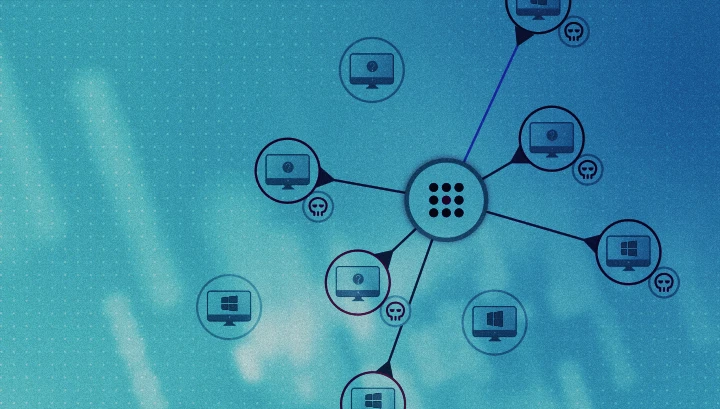
Propagate empowers Red and Purple Teams to ethically hack the organization by mapping the internal attack path. Starting from potential entry points—like exposed hosts or systems near crown jewels—Propagate continuously gathers intelligence, hopping from machine to machine, gaining access, and simulating damage. Blue and Purple Teams benefit from the detailed diagnostics, which show the tool’s precise path along the kill chain, offering critical insights to quickly identify misconfigurations and close security gaps.
Drive Maximum Value from Automated Red Team Tools
Deploying an automated red team tool like SafeBreach Propagate amplifies a security team’s capabilities, allowing them to run more tests, detect issues sooner, and act on insights confidently. Whereas periodic BAS offers snapshots of control effectiveness, CART delivers continuous evaluation—uncovering regressions, confirming fixes, and generating the empirical evidence security leaders need for informed, cost-effective decisions.
Used together, BAS and CART create a powerful feedback loop. BAS gives targeted validation; CART delivers continuous, real-world simulation and automated re-validation, reducing guesswork and helping teams remediate the right issues sooner. This combination shrinks exposure windows, lowers incremental testing costs, and ensures security controls remain effective over time.