Summary
Adoption of Gartner’s Continuous Threat Exposure Management (CTEM) framework has crossed the majority threshold—58% of organizations have a program in place—but adoption and effectiveness are not the same thing. Organizations still identify more than 13,000 exposures per year while remediating only half. And fewer than 25% of security leaders say they trust the data their tools produce. The root problem isn’t technology; it’s program execution. Most teams have built CTEM as a faster version of vulnerability management, stopping at discovery and prioritization without validating whether exposures are genuinely exploitable, existing controls would stop an attack, or remediation had the intended effect. Read on to learn the common challenges organizations face when it comes to CTEM implementation and what operational characteristics separate effective CTEM programs apart.
Author: SafeBreach
As enterprises struggle with AI-generated threats, tool fatigue, and alert overload, traditional, reactive security measures have become insufficient. Organizations are increasingly turning to the Continuous Threat Exposure Management (CTEM) framework developed by Gartner™ as a more proactive way to manage exposures.
And, so far, the numbers look promising. According to recent research, 58% of organizations have already adopted CTEM, with another 34% planning to do so. By any reasonable measure, CTEM is no longer a forward-looking framework discussed at conferences, but a real program running in more than half of security organizations today.
But adoption and effectiveness aren’t the same thing. And many of the organizations who have implemented the CTEM framework are still struggling to answer the most fundamental question regarding their exposures: Are we making a measurable impact on risk reduction?
The Data Beneath the Adoption Numbers
Organizations identify an average of more than 13,000 exposures per year, but only about half of those are remediated annually. Attacker timelines, meanwhile, are increasing in speed—Mandiant’s M-Trends 2026 report found that the median time between initial access and handoff to a secondary threat group has dropped to 22 seconds. The gap between how fast organizations find and fix exposures and how fast attackers move isn’t closing. In many circumstances, it’s getting bigger.
An underlying trust problem compounds this challenge. Only 25% of security leaders say they actually trust the data in their security tools. If a CTEM program is built on findings a security leader isn’t confident in, they aren’t managing exposure—they’re managing uncertainty with extra steps.
And when it comes time to demonstrate value, the numbers get worse: 41% of CISOs report they cannot directly correlate their security investments to risk reduction. For security leaders facing increasing scrutiny from boards, regulators, and the C-suite, that’s not just a measurement problem. It’s a credibility problem.
Where Most CTEM Programs Break Down
The root issue is not in the technology or tooling being used in a CTEM program. Instead, challenges arise in how organizations operationalize the framework itself. Many enterprises have adopted CTEM as a more continuous version of vulnerability management. They’ve added frequency and tooling, but they haven’t changed the underlying logic of their security program:
- Find exposures
- Score them
- Hand them off for remediation
- Repeat
That’s not CTEM. That’s a faster vulnerability scanner. And the result is one of three challenges that keep an organization from realizing the true promise of CTEM implementation:
- Stopping at discovery. CTEM was designed to be a risk-reduction discipline, not a detection exercise. Programs that define success as “we found more things, faster” are solving the wrong problem. Finding exposures faster doesn’t reduce risk if the findings accumulate unvalidated. Organizations need to know which of the 13,000+ annual exposures they found are genuinely exploitable in their environment—and which of those will be addressed by their existing controls.
- Prioritizing without validating. Most programs use risk scores and threat intelligence to decide what to fix first. That’s necessary, but it’s not sufficient. Prioritization tells you what’s theoretically important based on generic scoring. Validation tells you what’s actually exploitable in your specific environment, with your specific controls, against the specific attack techniques adversaries are using right now. Without validation, you’re triaging based on assumptions.
- No closed loop. Effective CTEM isn’t a findings feed handed to a remediation team. It requires a closed operational loop: continuous testing, validated evidence of exploitability, prioritized action with clear ownership, and—critically—confirmation that the fix held. Most programs break down somewhere in that chain. Usually between “here’s what we found” and “here’s proof the risk was reduced.”
What an Effective CTEM Program Actually Looks Like
The organizations effectively using CTEM to measurably reduce risk and enhance cyber resilience share four operational characteristics:
- Intelligence-driven. The program correlates live threat activity with internal telemetry—not just CVE feeds, but actual adversary behavior patterns mapped against the organization’s specific environment. The question isn’t “what vulnerabilities exist?” It’s “what are the attack techniques active in the wild right now, and which of our exposures do they target?”
- Validation-first. Before any exposure makes it onto a remediation list, the program validates whether it’s genuinely exploitable and whether existing controls would detect or stop the attempt. This is where adversarial exposure validation (AEV) becomes a load-bearing part of the program—not optional add-ons for mature teams. Validation converts a list of theoretical risks into an evidence-based picture of actual exposure.
- Business-contextualized. Prioritization is anchored to asset criticality and business impact, not CVSS scores. A critical vulnerability on an isolated development server is a categorically different problem than the same vulnerability on a system with access to customer data or financial systems. Without business context, the program optimizes for the wrong outcomes.
- Closed-loop. Findings flow to remediation with clear ownership and timelines. More importantly, fixes are re-validated after the fact to confirm fixes had the intended impact. The loop closes—or the program starts the cycle again. This is the step many organizations skip, and it’s the step that determines whether the program is actually reducing risk or just documenting it.
Closing the Gap with SafeBreach Helm
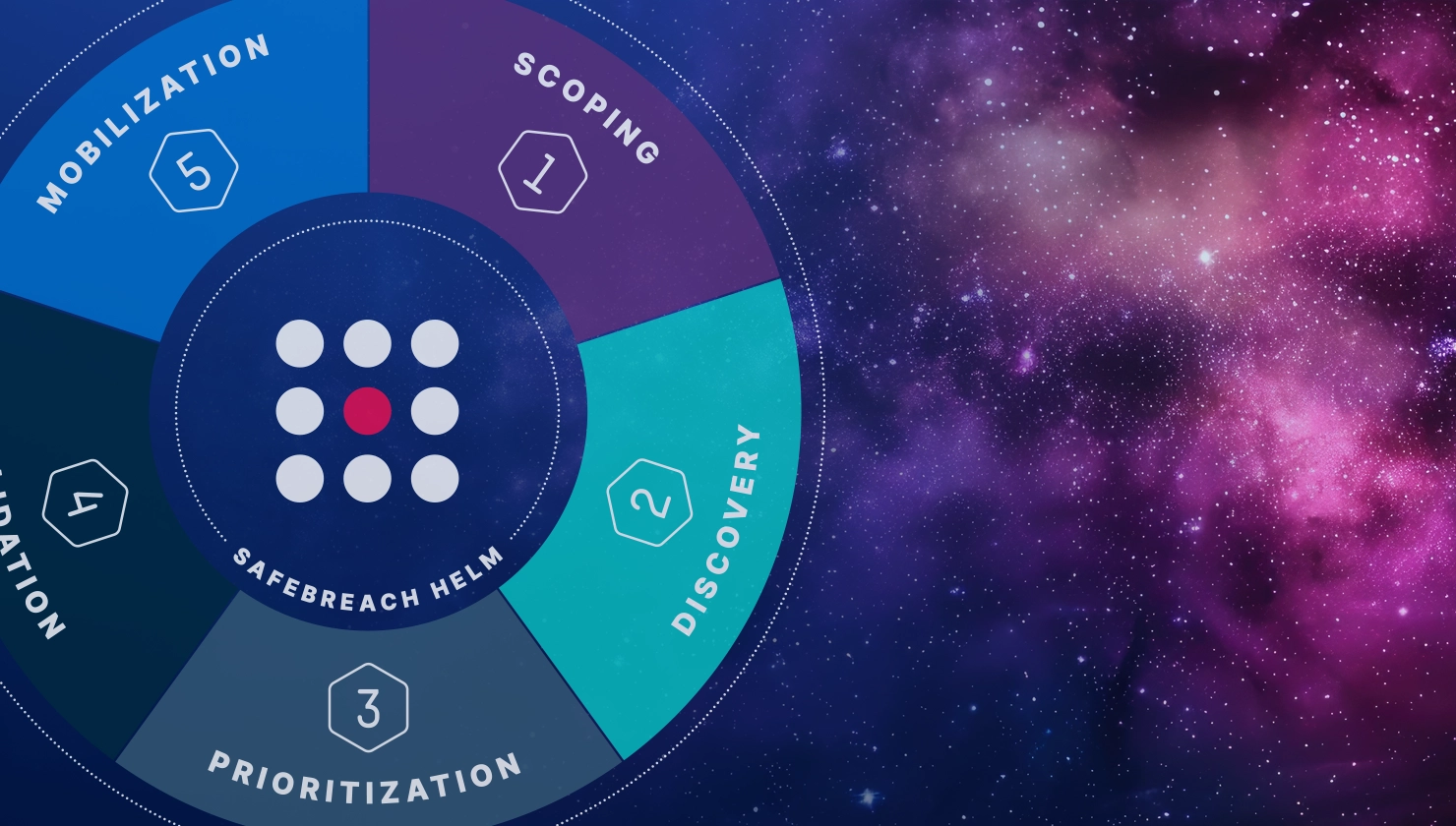
The SafeBreach CTEM Platform—powered by the SafeBreach Helm AI infrastructure layer—empowers organizations to treat exposure management as a continuous operational discipline that has adversarial validation at the center. SafeBreach Helm orchestrates three, purpose-built AI Agents that operationalize the CTEM framework—continuously and at enterprise scale.
As a result, security teams can move faster, fix the right things, and answer questions about risk reduction with evidence rather than estimates because:
- SafeBreach Helm doesn’t start from a CVE feed—it starts from your environment. The Analyst Agent ingests data from threat intelligence (TI) platforms, vulnerability management (VM) tools, external attack surface management (EASM), and SafeBreach’s simulators to surface what’s relevant to your organization. Ask SafeBreach Helm “Where would Volt Typhoon gain traction in my environment?” and it won’t return a generic list of vulnerabilities—it returns a prioritized picture of the attack techniques active in the wild mapped against the specific exposures that exist in your infrastructure.
- SafeBreach Helm doesn’t treat validation as a nice-to-have, it’s the foundation. The Validation Agent—powered by SafeBreach Validate (BAS) and SafeBreach Propagate (attack path validation)—tests whether each identified exposure is actually exploitable in your unique environment, and whether your existing controls would detect or stop the attempt. The result isn’t a list of theoretical risks ranked by CVSS score. It’s an evidence-based picture of actual exposure, built from real adversary techniques run against your real defenses.
- SafeBreach Helm doesn’t just tell you what’s exploitable—it tells you what matters. It anchors prioritization to asset criticality and business context, so a vulnerability on a customer data system surfaces very differently than the same vulnerability on an isolated dev server. By unifying data from across your security ecosystem into a single view of risk, SafeBreach Helm ensures remediation resources flow toward the exposures that represent genuine business impact—not just the ones with the highest severity rating.
- The SafeBreach CTEM Platform is explicitly built to close the loop that most programs leave open. The SecOps Agent translates validated findings into actionable remediation guidance, routes them to the right teams via workflow and ticketing integrations, and—critically—re-validates after fixes are applied to confirm they had the intended effect. If a fix doesn’t hold, the cycle restarts. If it does, the risk is demonstrably reduced. Either way, you’re managing risk—not just documenting it.
The 58% adoption figure is real progress. But progress on adoption isn’t the same as progress on outcomes. Most organizations are still working to close that gap and the SafeBreach CTEM Platform and SafeBreach Helm can help. Request a customized demo to see it for yourself.