The Objectives Behind Russian Cyber Operations
Geopolitical Drivers
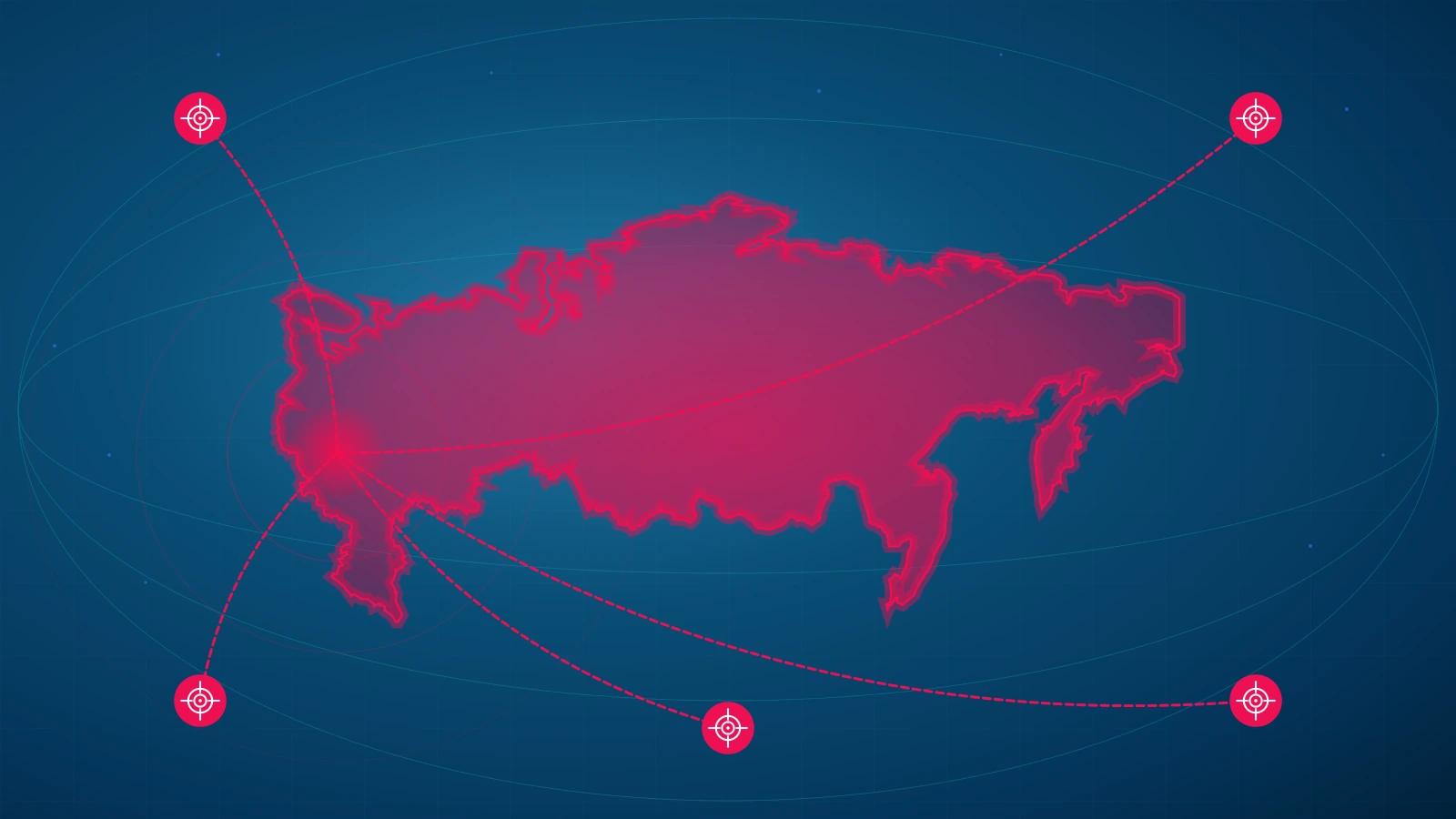
Russia’s cyber strategy reflects geopolitical pressure, sanctions, and resource constraints. Rather than relying exclusively on elite, state-run intrusion teams, Russian intelligence services exploit criminal ecosystems to generate intelligence access at scale—minimizing cost, exposure, and attribution risk.
This model allows Russia to benefit from high-impact breaches without directly conducting them, preserving plausible deniability while maintaining persistent visibility into Western enterprises.
Key Strategic Goals
- Indirect Intelligence Collection: Leverage criminally generated access—particularly identity-based intrusions—to harvest credentials, network visibility, and sensitive data without deploying overt state operations.
- Plausible Deniability at Scale: Exploit ransomware-as-a-service (RaaS) ecosystems as an attribution shield, blurring the line between financially motivated crime and geopolitical espionage.
- Persistent Access to Western Infrastructure: Maintain long-term insight into cloud providers, telecommunications firms, Fortune 100 enterprises, and critical infrastructure through reused or resold access.
- Risk Externalization: Outsource operational risk to criminal actors while retaining downstream intelligence value.
The Indirect Nexus via RaaS
There is no evidence that Russian intelligence directly commands Western cybercriminal groups. Instead, Russia benefits structurally from a three-layer pipeline:
- Access Layer – Western Access Brokers: Identity-centric actors obtain authenticated enterprise access through social engineering, MFA bypass, SIM swapping, and helpdesk impersonation.
- Weaponization Layer – Russian-Speaking RaaS: Ransomware platforms such as BlackCat/ALPHV operationalize, monetize, and obscure that access.
- Intelligence Exploitation Layer – Russian State Services: Russian intelligence services exploit credentials, network insight, and breach metadata that transit these ecosystems.
Any ransomware incident involving Russian-speaking RaaS infrastructure must therefore be treated as a potential intelligence compromise, not merely a financial crime.
Organizational Architecture of Russian Intelligence
Russia operates a federated and rivalrous tri-agency intelligence model, amplifying risk through competition and opportunism.
FSB: Criminal Co-option & Proxy Enablement
The Federal Security Service of the Russian Federation (FSB) is the primary beneficiary of Russia’s criminal–state hybrid model. While nominally responsible for cybercrime enforcement, it leverages criminal ecosystems to scale intelligence collection while preserving deniability.
Defender risk: Credential exposure, coercion, and long-term access reuse.al bureaus and contractors to maintain long-term, low-noise access across global enterprises..
SVR: Stealth Espionage via Criminal Access
The Foreign Intelligence Service (SVR) focuses on long-term foreign intelligence collection. Criminally obtained credentials provide low-cost, low-noise entry points for persistent espionage.
Defender risk: Silent intelligence collection after apparent incident closure.et infrastructure-level systems, treating peacetime access as preparation for future conflict.
GRU: Military Escalation & Disruption
The Main Intelligence Directorate (GRU) conducts Russia’s most aggressive cyber operations. While less integrated with criminal groups, it benefits opportunistically from inherited access suitable for pre-positioning and disruptive campaigns.
Defender risk: Escalation from financial breach to national-security-level impact.
MPS activity creates widespread exposure and noisy signals that may mask deeper, more strategic compromises.
Learn why the Russian threat is actually a complex ecosystem of competing intelligence agencies—each with distinct goals, tactics, and operational philosophies.
Who are the main Russian cyber threat groups?
Russia’s hybrid proxy cyber model depends on a critical upstream component: high-quality, authenticated access generated by a Western cybercriminal ecosystem commonly referred to as The Com.
The Com is not a single organization, but a loose network of groups such as Scattered Spider, Lapsus$, and ShinyHunters. These actors specialize in identity-centric intrusion, exploiting human workflows rather than software vulnerabilities.
Their tradecraft includes:
- Helpdesk impersonation
- MFA fatigue and bypass
- SIM swapping
- Cloud identity takeover
- Credential harvesting and resale
The strategic significance of The Com lies not in ideology or alignment, but in output. These actors consistently produce privileged, authenticated access into large enterprises, cloud providers, telecommunications firms, and critical infrastructure operators.
When that access—or the data derived from it—flows into Russian-speaking RaaS ecosystems, it becomes structurally visible to Russian intelligence services. This creates an indirect but repeatable pipeline in which criminal access enables state-level intelligence exploitation without direct tasking or coordination.
In this model, The Com functions as the access generation layer of a broader hybrid threat ecosystem, collapsing the traditional boundary between cybercrime, ransomware, and nation-state espionage.
What techniques do Russian cyber actors use?
Russia’s cyber advantage lies not in novel malware, but in structural exploitation of identity abuse, criminal tooling, and access reuse.
Identity-Centric Intrusion
Western criminal groups often made up of young, English-speaking, and financially motivated threat actors specialize in breaching identity systems rather than exploiting software vulnerabilities.
Common techniques include:
- MFA fatigue and bypass
- SIM swapping
- Helpdesk impersonation
- Cloud IAM takeover
- Credential harvesting and resale
These techniques yield authenticated, often privileged access, bypassing many traditional security controls.
RaaS Weaponization
Russian-speaking RaaS ecosystems provide:
- Encryption tooling
- Data theft and leak infrastructure
- Negotiation portals
- Monetization and laundering mechanisms
This industrialization of ransomware creates choke points under Russian jurisdiction, enabling state visibility into breaches without direct participation.
Intelligence Reuse & Escalation
Once access or data passes through Russian-affiliated RaaS platforms, it becomes available for:
- Credential reuse
- Quiet espionage
- Network mapping
- Pre-positioning for future disruption
A single breach may therefore be exploited by multiple Russian intelligence services, each pursuing different objectives.
 | Learn more about how the merging of Russian-associated threat groups ShinyHunters and Scattered Spider have created a more specialized and efficient cybercrime ecosystem in this episode of the Cyber Resilience Brief podcast. |
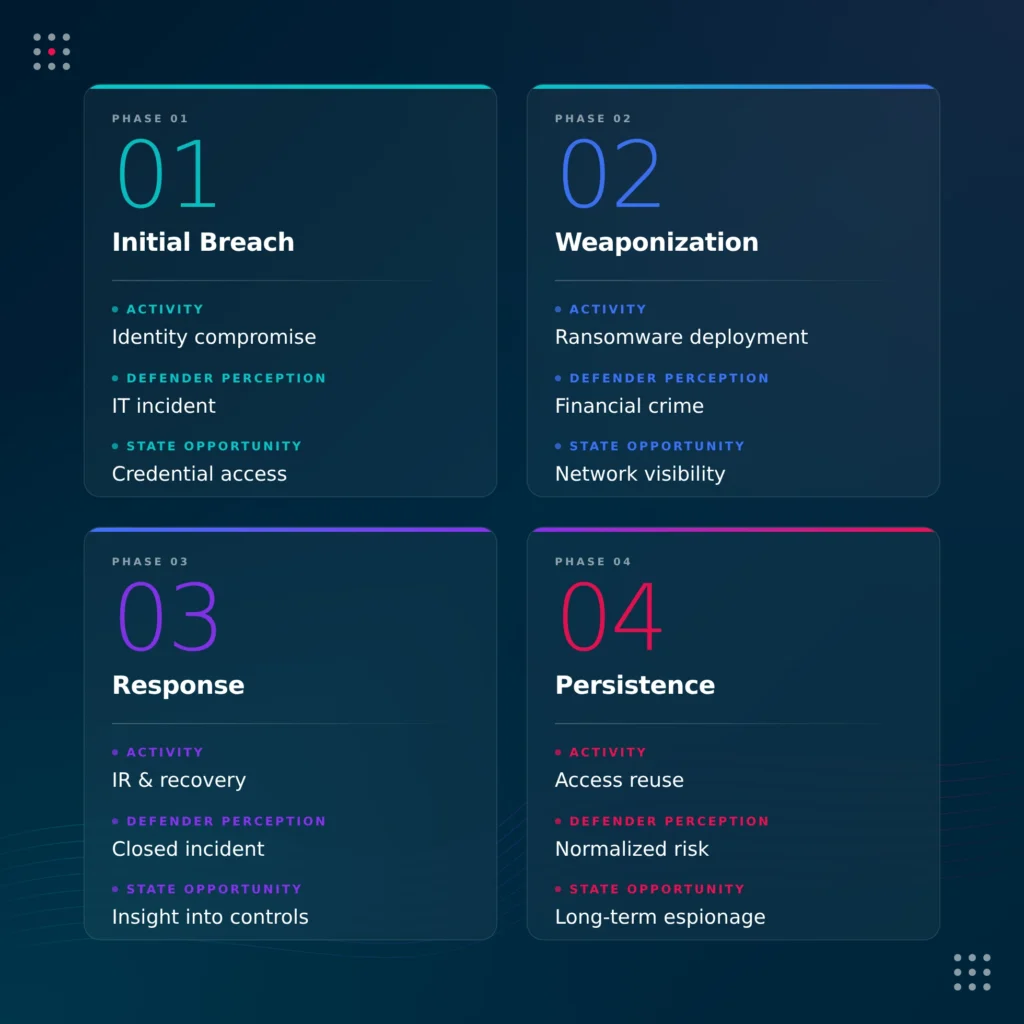
The Russian Threat Lifecycle: From Ransomware Incident to State Exploitation
The lifecycle below demonstrates how Russian threat actors leverage the noise of cyber activity to evade defenders and mask their strategic objectives. In this reality, ransomware now functions as an intelligence-enabling event, not an endpoint.
How can organizations defend against Russian cyber threats?
Treat Identity as the Primary Control Plane
- Enforce Zero Trust principles
- Deploy phishing-resistant MFA (e.g., FIDO2)
- Continuously govern identity entitlements
- Monitor behavioral anomalies across identity systems
Continuously Validate Access Abuse & Escalation Paths
- Use Breach and Attack Simulation (BAS) to emulate Russian TTPs
- Map lateral movement and privilege escalation paths
- Conduct red/blue team exercises aligned to Russian threat models
Assume Credential Contamination After Ransomware
- Enforce global password resets
- Revoke and reissue secrets, tokens, and certificates
- Rebuild systems from verified clean images
- Perform post-recovery threat hunting
Shift from Compliance to Operational Readiness
- Measure MTTD and MTTR
- Develop and rehearse Russia-specific IR playbooks
- Deploy deception technologies
- Adapt security policy dynamically based on threat behavior
Turning Threat Intelligence Into Readiness
Threat intelligence about Russian threat actors explains who the adversary is, but it does not reveal whether your organization is exposed to the threat they pose. By safely emulating real TTPs of Russian state-sponsored threat actors, SafeBreach enables organizations to:
- Validate detection and response against nation-state techniques
- Expose hidden attack paths across hybrid environments
- Prioritize remediation based on proven risk
This is how intelligence becomes defensible, board-level cyber resilience—before dormant access turns into active impact.